


Does your child struggle with losing at games? If so, you’re not the only one… but it can feel that way. I know the temptation when kids struggle with losing in games is to stop playing games completely. But, I urge you, keep playing games together as a family. Here’s why.
Struggling with Losing is Common
Your child isn’t the only one who has a hard time losing at board games. This is a really common struggle in childhood. You aren’t alone if it’s a struggle at your house. It’s been a struggle at mine, too.
I know the temptation when kids struggle with losing in games is to stop playing games completely. It feels like the easier path is to move away from games and move on with life.
But the thing is: understanding how to win and lose is a major part of life. And playing board games is one of the best ways to grow that skill. But we can’t do it if we abandon games altogether.
So how do we help? We keep playing games (don’t worry, I have more advice than that – it’s coming!).
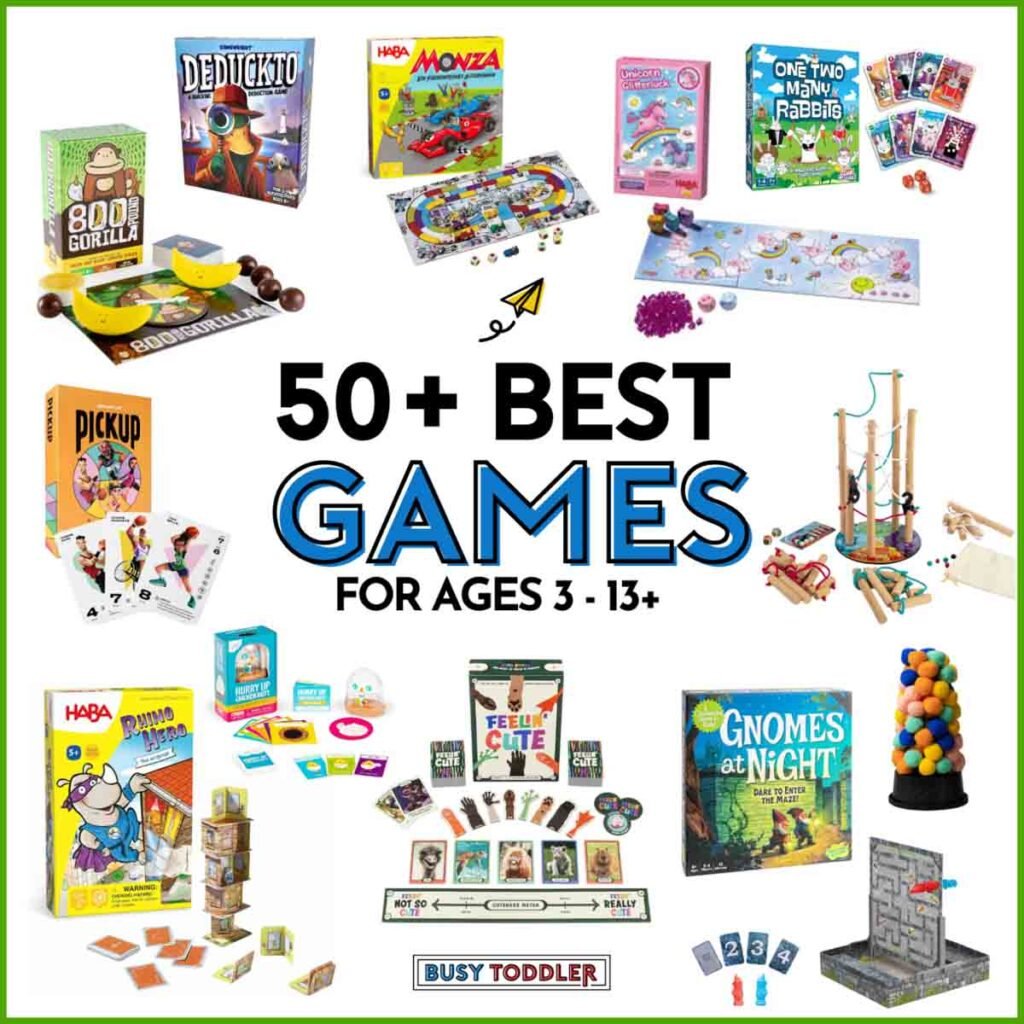
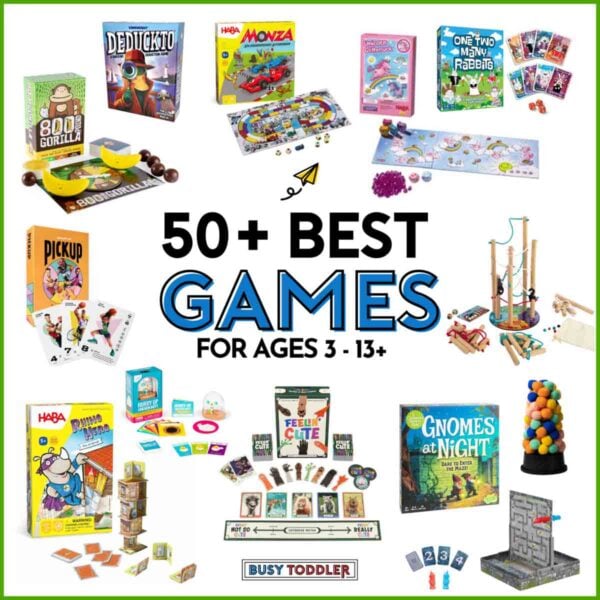
RELATED: Looking for a few new games to play as a family? Check out my ultimate list of the best board games for kids.
Why Should We Play Games?
Why bother with this skill? Well, life is full of times when kids will win and lose, have triumphs and failures. We want them to know that losing isn’t a reflection of them, it doesn’t make them bad, and it’s okay to not always succeed. These kinds of lessons are easily learned around board games and can stick with kids through harder spots in life as they get older.
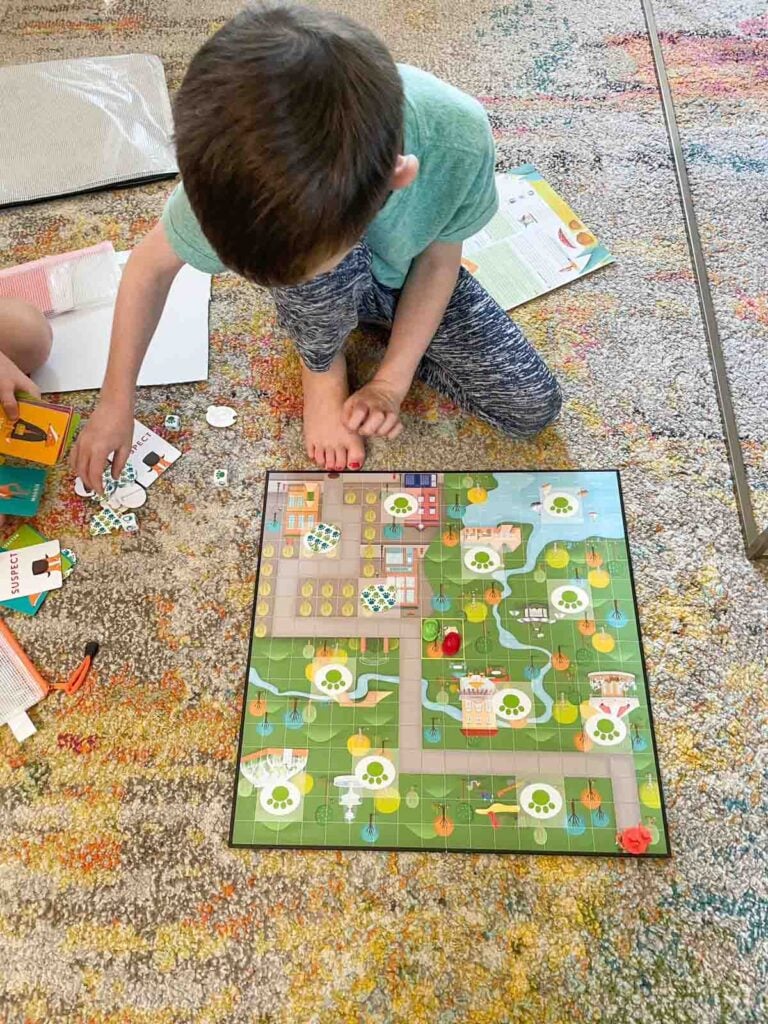
Playing games also helps our kids practice taking turns, work as a team, learn new vocabulary (words like dice, roll, space, and pawn), use math skills (subitize, add points, identify patterns) and critically think about strategy.
There are so many skills at work in games.
RELATED: Have a little one not quite ready to play a full game? Check out my favorite toddler activity that uses a pack of cards.
Busy Toddler is a participant in the Amazon Services LLC Associates Program, an affiliate advertising program. As an Amazon Associate, I earn from qualifying purchases. Read more about these links in my disclosure policy.
5 Steps to Help Your Child Learn How to Lose at Games
Here are the five steps I’ve taken to help my kids figure out how to win and lose at games. These are skills that are setting them up for success in life – not just in games of Battleship and Uno. And I’m so grateful we get to practice these skills together.
Step 1: Keep Playing Games
Yes, I said it before, but I’m saying it again. Please, keep playing games. It’s easy to want put away games and deal with this skill later, but it takes practice at losing games to normalize the process. As hard as it can be, keep playing games. Don’t stop.
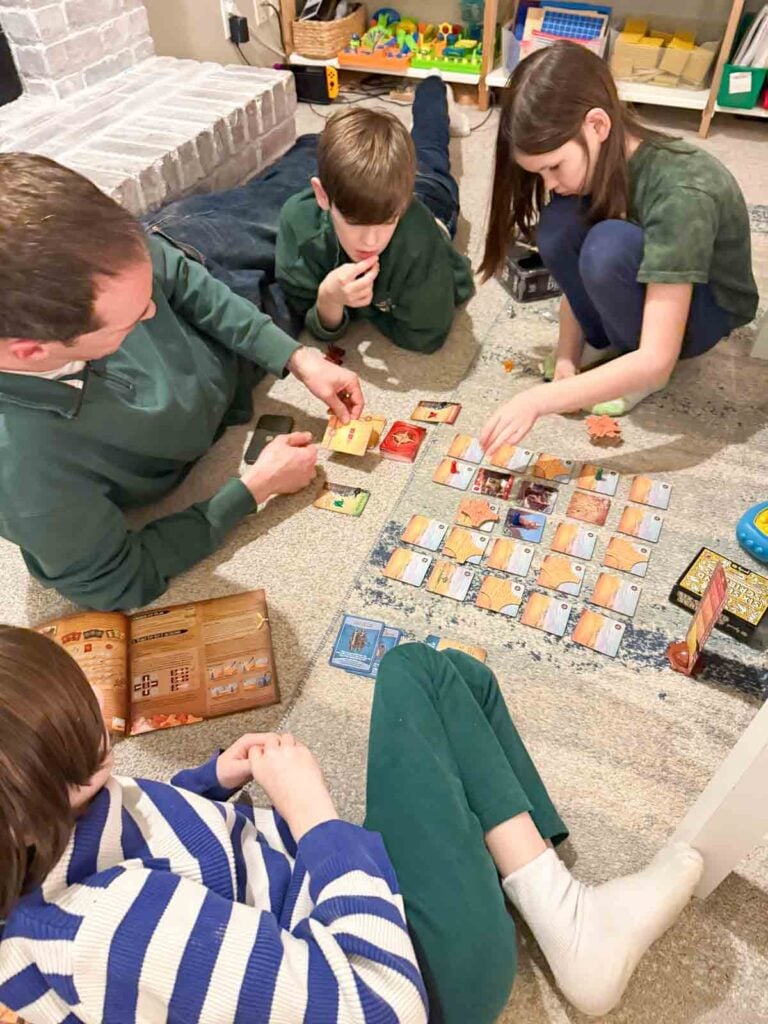
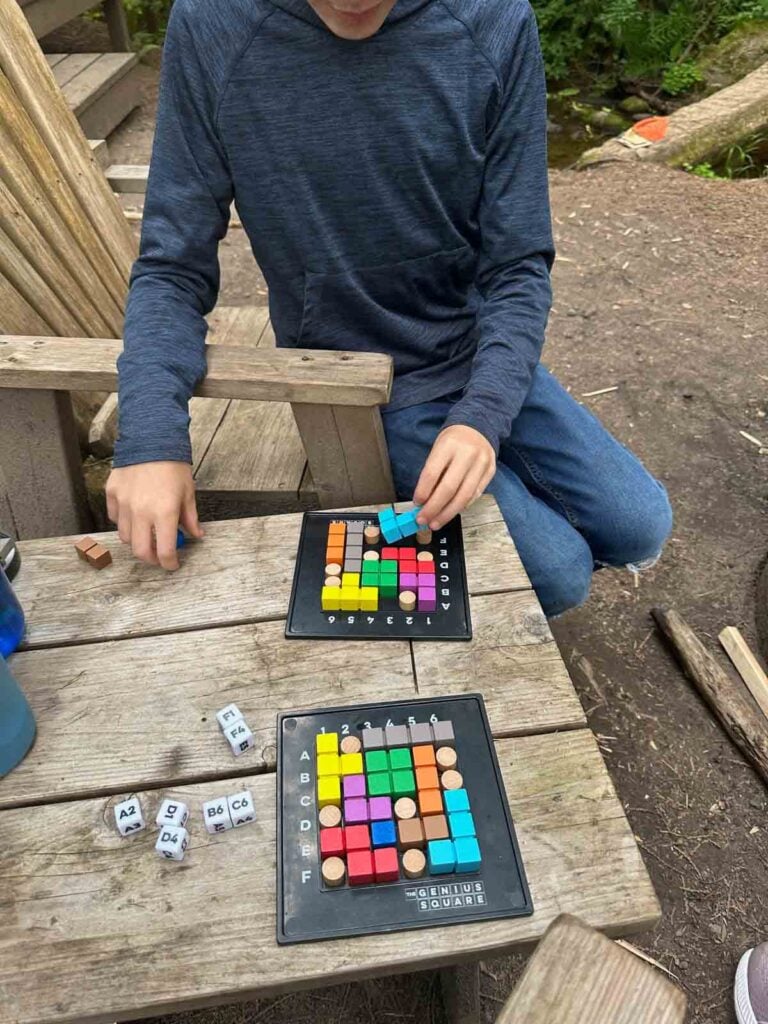
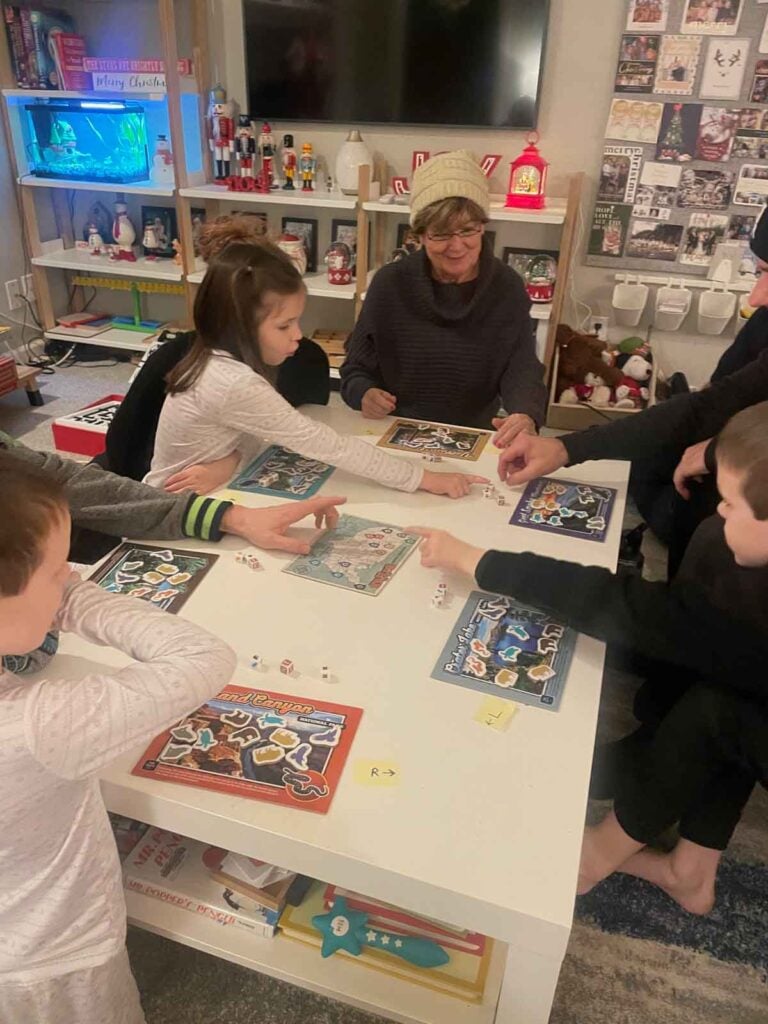
How this looks at my house: We play at least one board game throughout the week and often bring games with us out of the house to places like restaurants. Sometimes playing a game in public is easier than at home. Kids often act one way outside the house and another way when it’s just us.
RELATED: Ready to take some games on the road with you? Here’s my full list of travel-friendly favorites.
Step 2: Remember, No One Likes to Lose
These aren’t “kid-only” feelings.
Being upset and disappointed is a normal reaction to losing games – even in adults who have years of life experience. But for some reason, a child being upset over a game feels frustrating from an adult perspective.
When your kids lose a game and get upset, remember how you often feel when you lose or when something seems unfair. Processing a full range of emotions is a normal part of playing games. Continuing to play games gives our kids the opportunity to explore this feeling in a safe environment.
How this looks at my house: I am a notoriously competitive person – to an absolute fault – so this concept came naturally to me. I hate losing, so I deeply understand how disappointing and frustrating it is for a child. It gives me extra empathy for them because I know exactly how they feel.
This step focuses on you: Work on acknowledging how normal this feeling is while being a frequent trigger for many parents.
Step 3: Know Losing at Games is a Good Thing
When kids lose at games, we can help them learn that losing has no bearing on their self worth and they are not a bad person for losing.
That’s some incredible learning, and it may come with a side of tears. Remind yourself that you’re continuing to play games because it’s working – even when it’s tough.
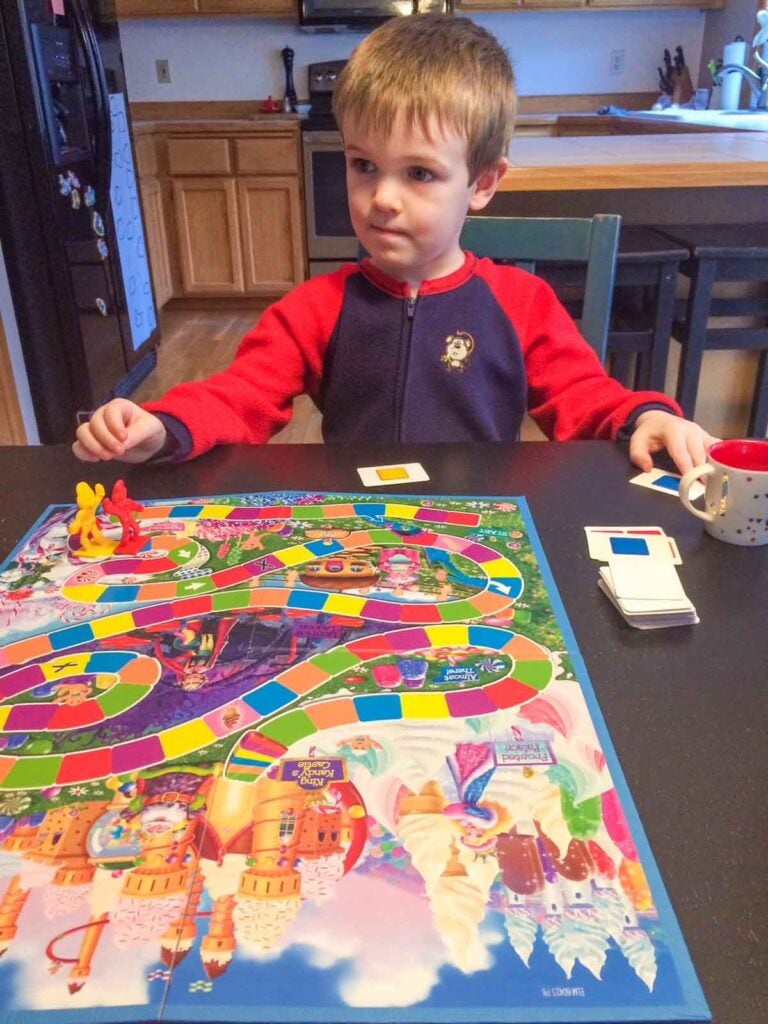
How this looks at my house: I can still see the shocked look in my Mother-in-Law and husband’s faces the first time I played Candy Land with my oldest…and won. I could have switched the cards around, but I didn’t because losing is a good thing. It’s a part of life. It may sound harsh, yet it’s a hill I will die on. It’s okay to beat kids at games – they’ll savor the first time they win even more.
Step 4: Model How to Lose
When you lose a game, share your grief process out loud with your kids. Narrate your experience and express how you feel. Let your kids know they aren’t the only ones who feel this way after losing.
Adults are often so good at handling emotions around kids that we forget to show our feelings or let them see our own process. This stoicism can, without any intention, leave kids feeling like they are the only ones who struggle with big emotions, that no one else feels sad when they lose, or that they’re somehow bad for having these feelings.
Giving them the chance to hear your reaction when you lose is a huge gift.⠀
As you play games – model, model, model. Let kids know how normal it is to lose, how normal it is to feel sadness, and how everyone has these emotions.
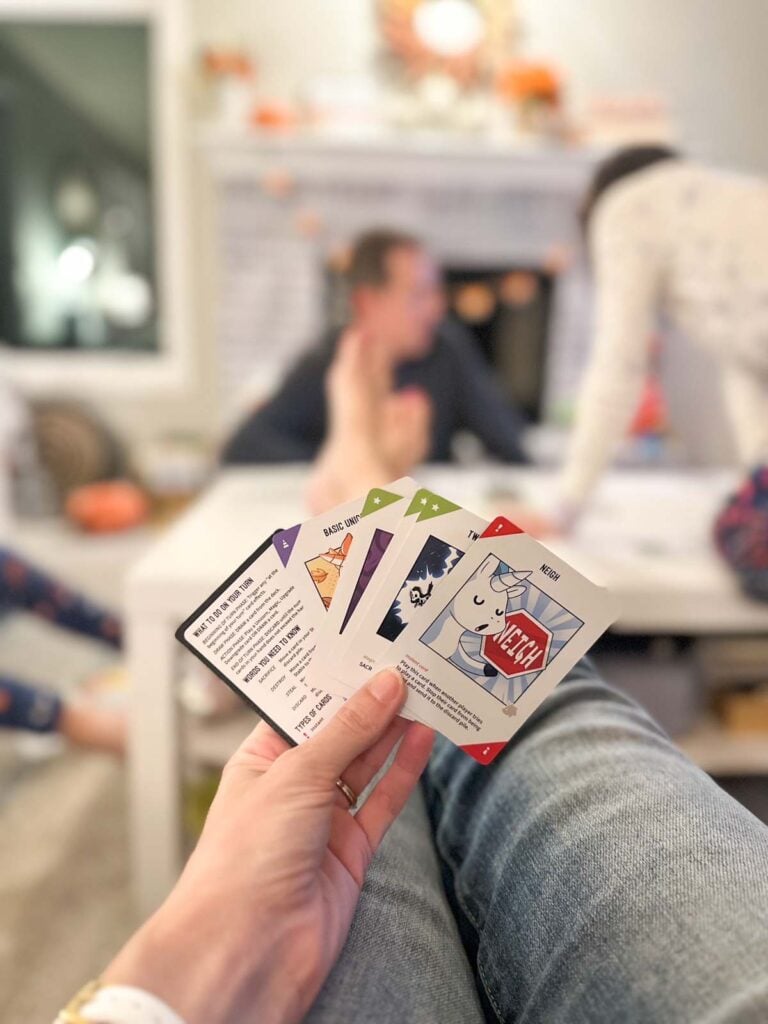
How this looks at my house: I use really simple and true statement like “UGH! No!!! I can’t believe I lost! I’m so disappointed. I wanted to win, but I’m really happy for you,” which gives my kids constructive language around losing.
Step 5: Create an “End Game Script”
Depending on a child’s developmental level, it can help to have a short “script” to use at the end of a game.
Practice your script before the game.
The person who wins says: “Thanks for playing with me.”
The person who loses says: “Good job winning today.”
Knowing they have a safe way to exit a game when they’re frustrated is incredibly helpful for my kids. They can count on this neutral exchange when tensions might be high and they aren’t sure what words to use. The script is there for them – ready and waiting – to help them exit the game with grace.
How this looks at my house: We use the script above AND as my kids have gotten older, we talk a little about the type of game. Is it a skill-based game (like Catan) or is it luck-based (like Chutes and Ladders)? Especially with luck based games, the reminder is that there is nothing you can do to change the outcome… it’s pure chance who wins.
Keep Playing Games to Help Kids Develop Key Skills
Playing games may feel fun for your family, not fun at all, or somewhere in between. Wherever you are with games – please keep playing. Games are a huge gift to our kids’ development.
Games help our kids learn how to recover from a loss, know that they are still loved if they lose, and understand that losing isn’t a reflection of them as a person.
If your child is struggling with this, keep on trucking. Keep playing those games – the lessons learned today are invaluable for the future.


 Subscribe to my free newsletter and I’ll send you “35 Easy Toddler Activities to Break Up the Day!”


Linda says
Great article on helping children learn to win and lose with grace. One thing we do to help ease the pain of losing is the winner is the one who has to put the game away. It takes away the sting of losing just a little bit.