


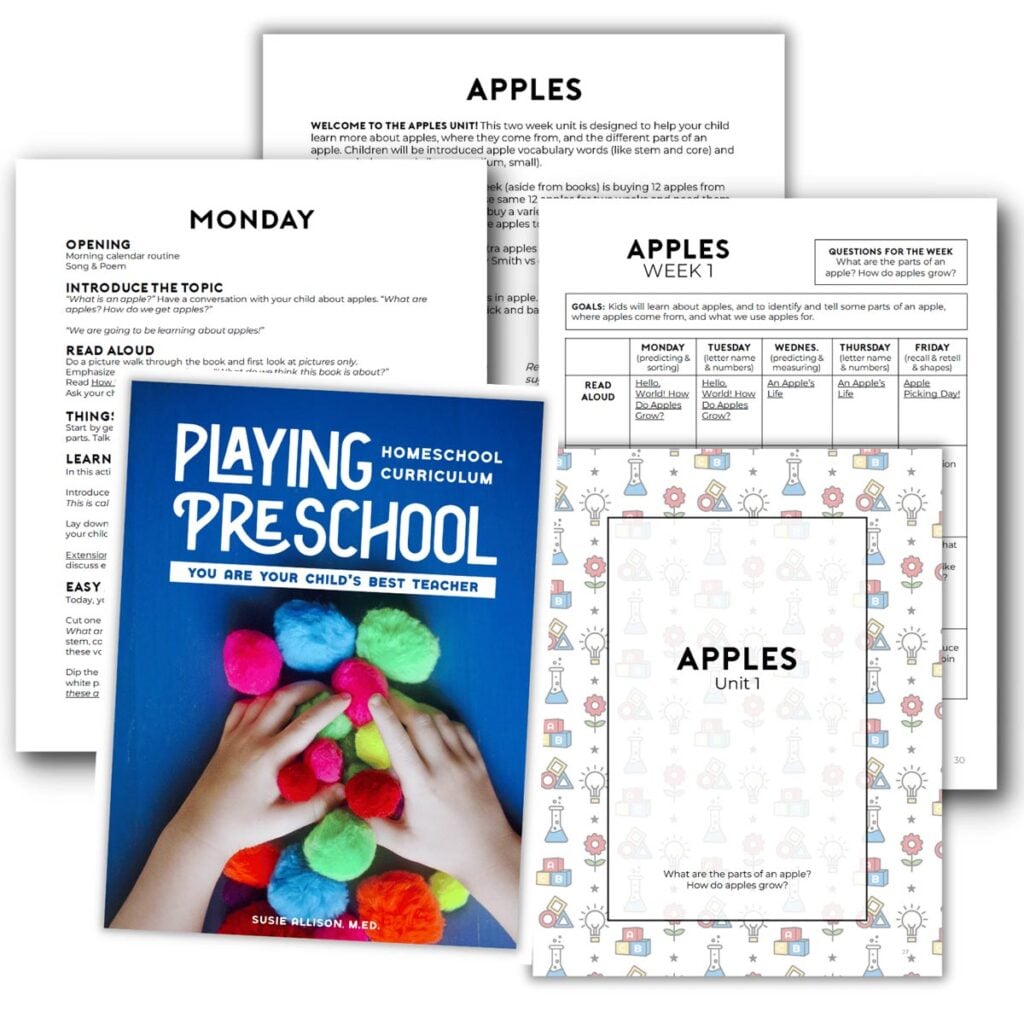
Sample Playing Preschool with Your Family
Playing Preschool is a hands-on, play-based homeschool curriculum for preschoolers. Designed to be flexible and fun, it helps families bring learning to life at home without the stress. But not all preschool homeschool programs are the same. It’s important to preview what you’re getting before you commit.
Check out a free sample of Year 1, Week 1: Apples to see exactly how Playing Preschool works in your home.
How Playing Preschool Works
Preview of Playing Preschool
In under an hour a day, you can guide your preschooler’s learning while building lasting family memories. Playing Preschool is a secular, play-based homeschool curriculum that makes teaching easy, enjoyable, and meaningful.
Designed with a thoughtful sequence and built-in progression, Playing Preschool takes the guesswork out of what to teach next. Start with Year 1, Week 1: Apples – a two-week unit where children explore apples through science, vocabulary, and sequencing activities.


Are you ready to know exactly what to teach your child each day?
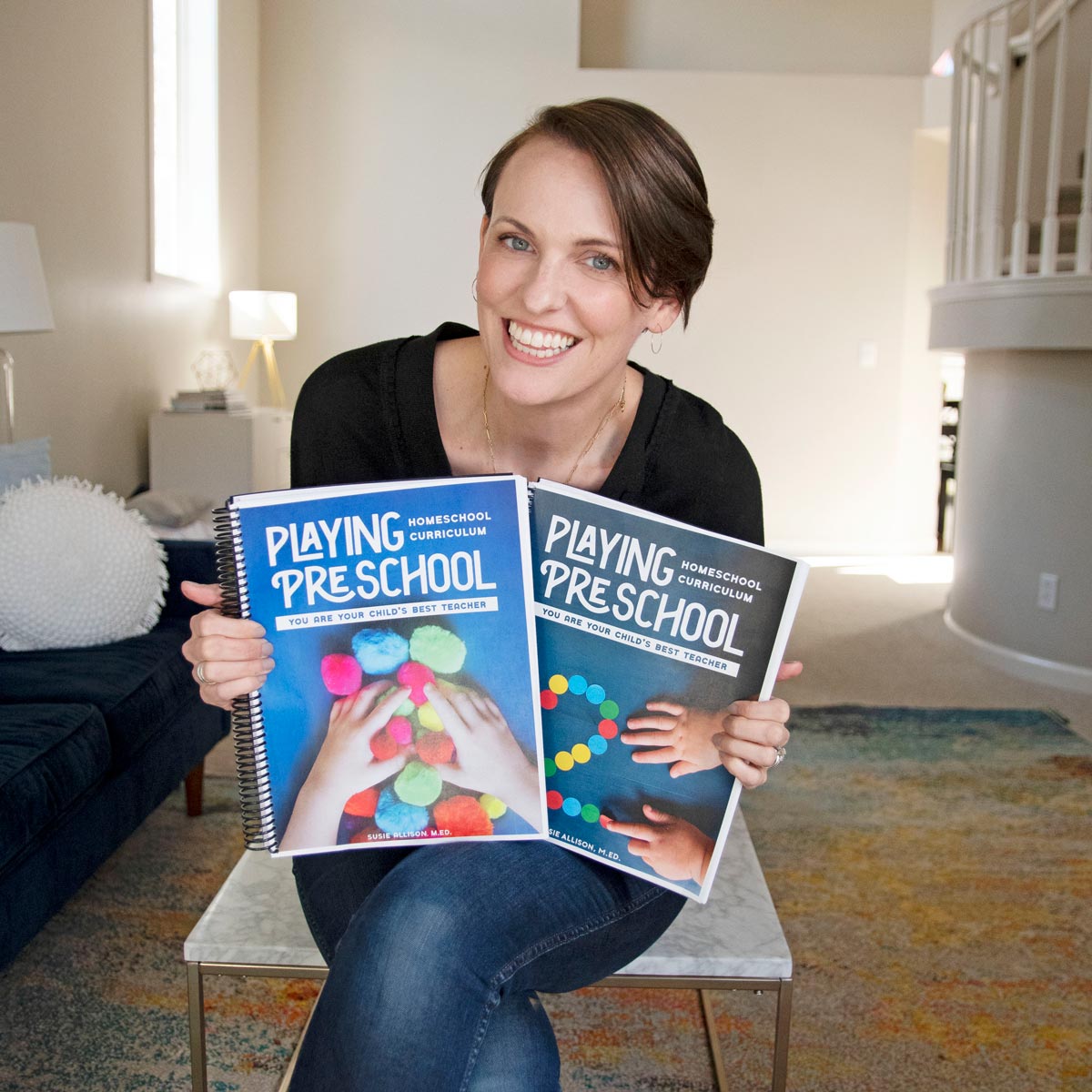
The complete 300+ page curriculum comes with my amazing Start Up Guide, which is jam packed with all the extra information you need to use Playing Preschool in your house.
You’ll learn more about how I made this program, why I set it up the way I did, what your child will be learning, and all my tips and tricks for teaching it in your home.
The path to easy home-based learning starts today!


 Subscribe to my free newsletter and I’ll send you “35 Easy Toddler Activities to Break Up the Day!”


Katie says
Very excited about your play preschool curriculum – thanks for sharing the sneak peek! Curious to better understand how you decided to sequence the units around the alphabet. I noticed you didn’t take the traditional approach of going in order (i.e., Unit 1 focuses on A, Unit 2 focuses on B, etc). Can you share more about how you decided which letters and topics to include first, versus later in the 19 units? Thanks so much!
busytoddler says
Hi Katie, I chose to mix up the letters for some very specific reasons: 1. I don’t want my kids relying on order to help them remember this. I want the relationship to be with each individual letter and not dependent on knowing the letter before or after. So I mix them up as I introduce them. 2. Sometimes, I made the unit and the letter fit together, like A for Apple and Q with U for Things that Go Together. I’d rather kids make connections to letters through units than through alphabetical order.
Hope this info helps!
Susie
Raida says
I was looking thru your sneak peak and I absolutely love your curriculum. I cannot wait to be able to get it for my two year old. Do you provide links to the read aloud so that we could read those online? Or would we first need to have those books purchased? Thanks in advance!
busytoddler says
Hi Raida! Thanks so much for the interest! I actually recommend you do NOT buy the books mentioned – but instead check them out from your local library. Buying books is so expensive, and you should only buy the ones you really really fall in love it. I had so much fun checking these out from my library. If you can’t find one that I listed, just pick any other book in that subject. I made the program so parents could use books they have or what they can find, rather than buying them all. Cheers!
Rachel Jennette says
Question – how does this curriculum address learning handwriting skills?
busytoddler says
Hi Rachel, It doesn’t. Handwriting is a VERY developmental process. Because of the varied age range of this program (2.5 – 5), handwriting cannot be addressed. Children learn to make diagonal lines and some letters between ages 4-5, full letter formation happens between 5-6 years old. Hope this helps answer your question!
Symone Koodrin says
How many pages per week/month on average? (If I decide to print)
Thank you 🙂
Susie says
Hi Symone, Each unit is approx 12 pages and that’s for a two week span. The program can be printed, all at once or as needed, and also works great as an ebook with color photos and clickable links.